About the Code-Maven Live events
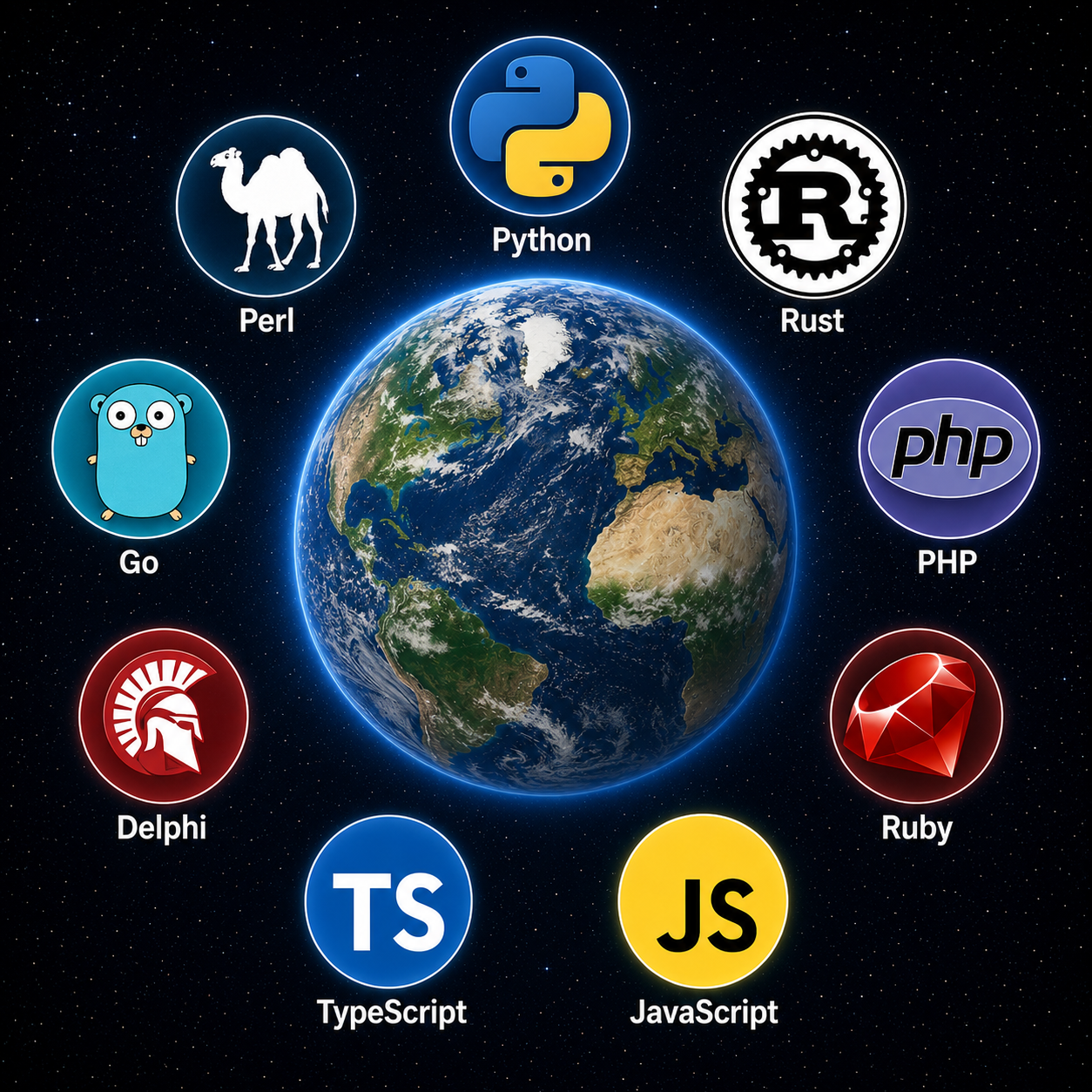
At the Code Maven live events hosted by Gabor Szabo you will learn how to use various programming libraries. We cover projects in a number of pogramming languages: Rust, Python, and Perl. We cover Git/GitHub/GitLab, Docker and Linux in general. We also cover various aspects of AI. e.g. AI aided programming.
Organizer
Gabor Szabo has been sharing knowledge and organizing communities for 25+ years. His current quest is to build an online community to allow opportunities for people who do not necessarily live in high-density areas. People who might have no opportunities to connect with other developers.
Why?
- For people who already gave the presentation once, we provide another opportunity to reuse the material. Some people like to iterate and improve their presentations.
- Provide another opportunity to reach a global audience that can ask questions and challenge the speaker.
- Potentially create conversation around the topic.
Format
There are various types of events.
- A guest presents a lecture s/he has prepared. (Maybe even given at an in-person event or in some other language.)
- A guest shows us her/his project. (e.g. the guest wrote a crate in Rust or a library in Python and shows us how to use it and maybe also how to contribute to it.) (This can be ad-hoc, after all the guest knows this stuff rather well.)
- The guest teaches us some technique in a rather ad-hoc manner using the pair-programming technique. e.g. How to use Tauri to build a small application.
Overview for the speakers
- Each event has one presentation and thus usually one guest speaker.
- Presentations are usually somewhere between 20-60 min long thogh if the topic requires more time we can have a longer session up to 2 hours or we can have multiple sessions.
- Workshops are usually 1-2 hours long.
- The audience can comment and ask questions via chat.
- Presentations are recorded and published on YouTube.
- After the main session is over and we turn off the recording some people usually stay around and have further discussion. Off the record.
Schedule
-
We don't have a fixed schedule for the events. Whenever you (the guest) and me (Gabor, the host) can agree on a date and time, that's when we'll have the meeting.
-
I prefer to schedule at least 2 weaks ahead, but 1-2 months is also fine. That allows for the promotion of the event and for people to save the date.
-
Time-wise we usually have our sessions between 8:00 (8 am) UTC and 18:00 (6 pm) UTC.
-
The eastern session should start at a time that is no later that 20:00 in New Zealand. Starting at 8:00 UTC allows people from New Zealand, Australia, Japan, etc. all of Asia, the Middle-East, Europe, and Africa to attend.
-
The western session should start at a time that is 8:00 am (or later) in California. Starting at 16:00-18:00 UTC allows people from the the Middle-East, Europe, Africa, and all of the Americas to attend.